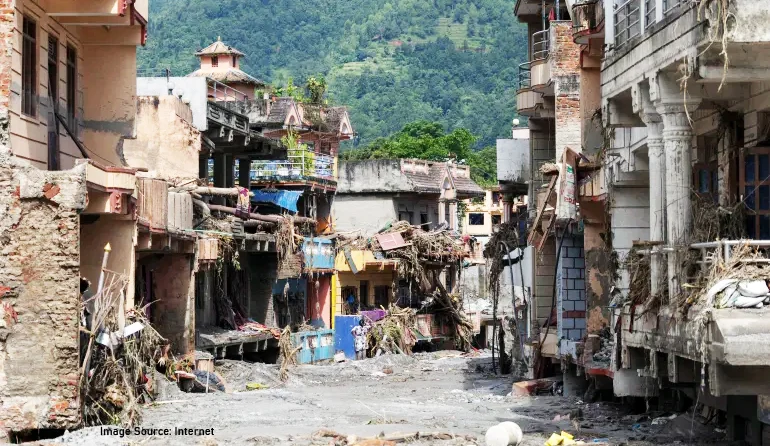
SPECIAL DESK | IMPHAL, AUGUST 29, 2026 — Rescue operations across the Himalayan river valleys of Nepal and Tibet resumed at full scale on Saturday following days of secondary flood alerts. The confirmed death toll from the August 26 flash flood has climbed to at least 633 people (626 in Nepal, 7 in Tibet Autonomous Region), with nearly 2,400 people still unaccounted for.
The surge of water, mud, and boulders wiped out the Gyirong Port border crossing—the primary trade and transit artery between Nepal and China—and washed away entire villages across Rasuwa, Nuwakot, and Dhading districts.
Executive Summary & Press Fact Sheet
1. Seismic Event Confirmed as Massive Glacial CollapseInitial reports attributed the flood to a tectonic earthquake or a Glacial Lake Outburst Flood (GLOF). However, joint satellite assessments by the United States Geological Survey (USGS) and international geomorphologists confirmed that a massive glacier collapse near Langtang National Park triggered the catastrophe. A 610-meter-wide glacier segment sheared off at an altitude above 5,000 meters, plunging nearly 1.9 kilometers into the valley. The kinetic friction and impact melted the ice rapidly into a high-speed debris torrent, traveling downstream at speeds up to 180 km/h. The energy released by the falling mountain mass generated a seismic signal equivalent to a Magnitude 5.2 event.
2. Casualties, Foreign Tourists & Regional ImpactTotal Population Impacted: An estimated 93,000 people have been affected across the affected Trishuli and Bhote Koshi river corridors.Foreign National Toll: Over 668 foreign nationals from 34 countries are among the dead or missing. This includes at least 288 Indian citizens—many on pilgrimage to Mount Kailash and Lake Mansarovar—alongside tourists from the US, UK, Australia, Malaysia, and Ukraine. Downstream Destruction: Victims were swept as far as 240 kilometers downstream. Multiple bodies have been recovered in Nepal's Nawalparasi district and across the border in Kushinagar and Maharajganj districts of Uttar Pradesh, India.
3. Infrastructure Collapse & Economic TollTrade Arteries Destroyed: Gyirong Port's customs complexes, immigration offices, and border checkpoints were completely buried. Power & Roads Wiped Out: Hydroelectric assets, including the Upper Trishuli-1 Hydropower project, sustained catastrophic structural damage. Main highways beyond Betrawati have merged completely into the riverbed, rendering remote settlements accessible only by air. Reconstruction Estimate: Nepal's Ministry of Finance puts preliminary damage and long-term rebuilding costs at over NPR 200 billion (approx. $1.3 billion USD).
4. Relief Operations & Downstream AlertEvacuations: Nepali security forces and military helicopters have rescued more than 3,500 people from cut-off regions.Barrier Lake Threat Recedes: Chinese authorities reported that the risk of a breach from a 2-million-cubic-meter barrier lake formed by landslide debris upstream has decreased as water levels began to recede.Indian Border Vigilance: The Indian states of Uttarakhand, Uttar Pradesh, and Bihar have put border district administrations on high alert to monitor glacial lakes and river channels flowing from Nepal.
Massive Glacier Collapse Triggers Devastating Himalayan Flood: Over 630 Dead, 2,400 Missing Along Nepal-Tibet Border
Current Situation of Nepal Flash Floods